A logo on a smart product can be a separate metal part, ink printed on the housing, or a metallic finish applied to a surface. These methods can look similar in a product rendering, but they are made differently and bring different design and assembly considerations.
For AI glasses, robots, smart home appliances, connected audio products, computers and peripherals, and other connected devices, the useful question is not “Which method is best?” It is: What should the logo look and feel like, what surface will it go on, and what will the product experience in use?
This guide compares metal logo badges, screen printing, and foil stamping to help product, engineering, and sourcing teams decide what to sample.
At a glance
| Consideration | Metal logo badge | Screen printing | Foil stamping |
|---|---|---|---|
| Construction | A separately made metal component, often attached to the product | Ink is printed onto a surface | A foil finish is transferred to a compatible surface |
| Typical visual effect | Metallic, dimensional, and tactile | Flat graphic; color and finish depend on ink and substrate | Metallic-looking surface effect, usually low-profile |
| Design questions | Thickness, edge, shape, backing, and attachment | Ink/substrate compatibility, color, curing, and wear requirements | Substrate compatibility, foil adhesion, pressure, heat, and detail |
| Potential fit | Product housings where a distinct metal element is desired | Flat or formed surfaces needing printed graphics or multiple colors | Decorative areas and packaging where a flat metallic effect is desired |
| Validate before production | Fit, adhesion or fastening, handling, and environment | Ink adhesion, abrasion, chemicals, and environment | Foil adhesion, abrasion, and performance on the actual surface |
This is a starting point for discussion, not a guarantee of performance. The exact result depends on the chosen construction, materials, surface preparation, and production conditions.
1. Metal logo badge: a separate metal part
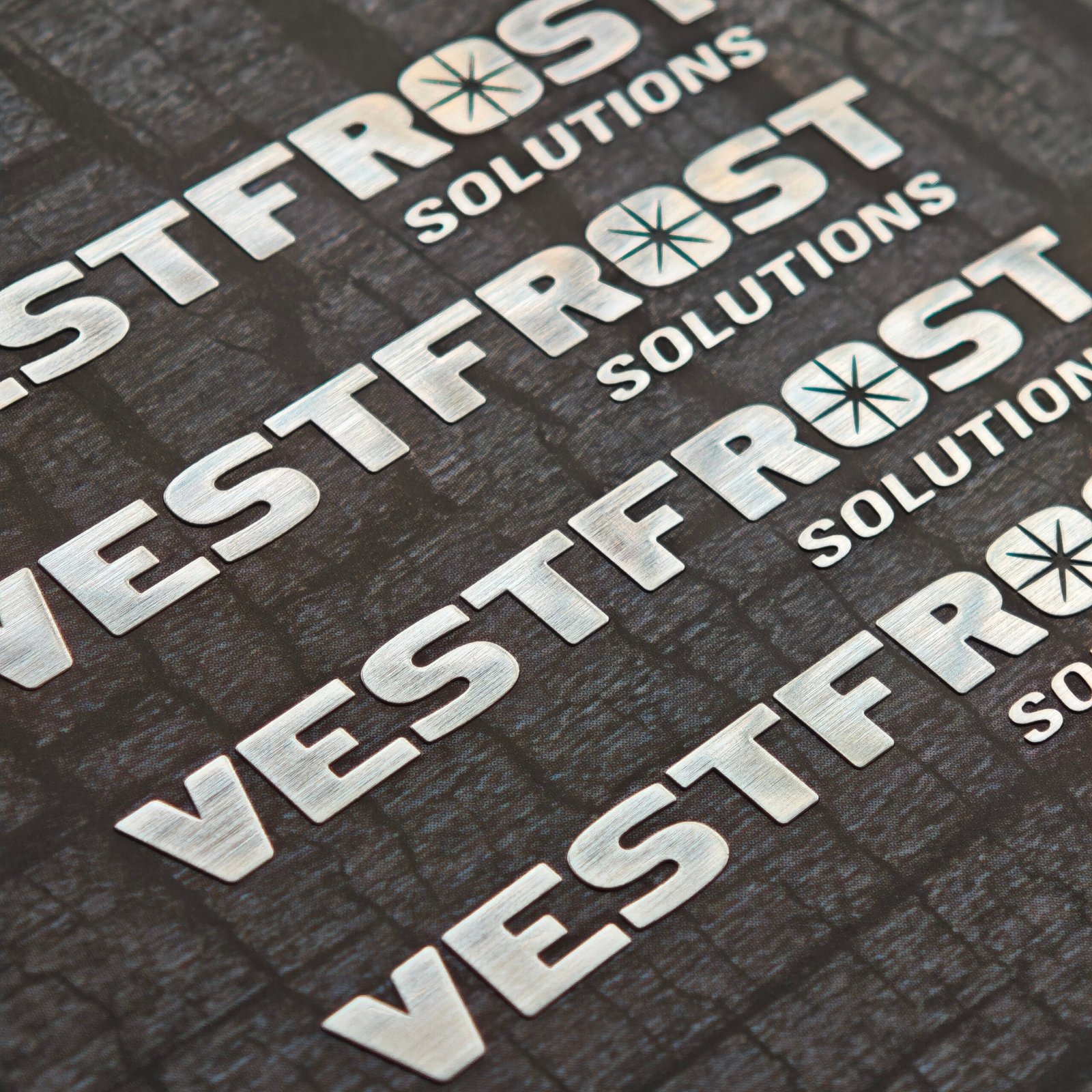
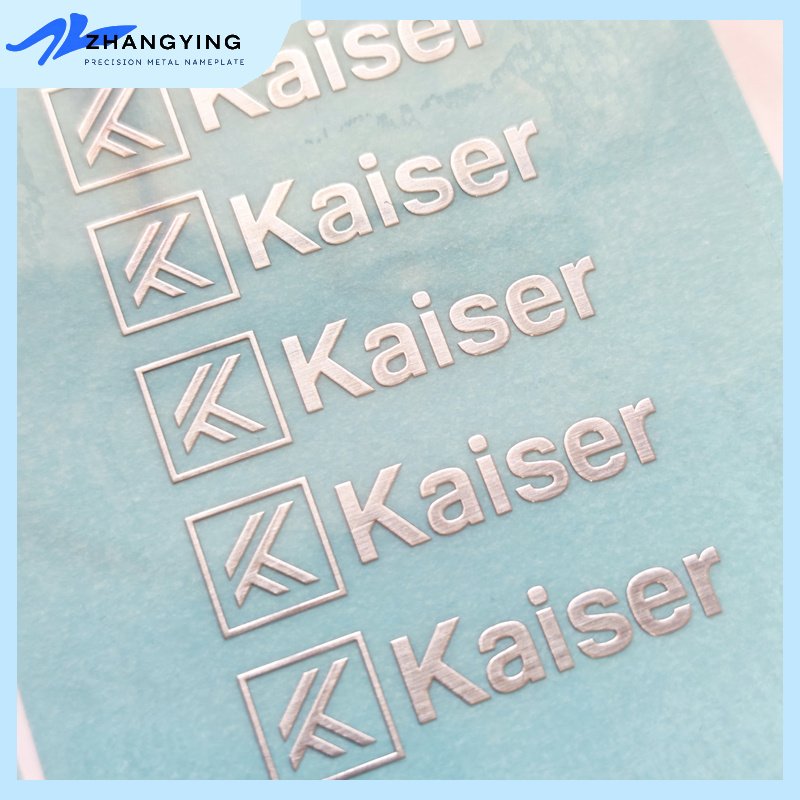
A metal logo badge is made as a distinct component and then attached to the product. Depending on the design, it may use nickel, aluminum, or stainless steel, with a selected finish and an adhesive backing or other mounting method.
A separate badge can add real metal reflectivity, a tactile surface, or raised detail that printed ink and foil do not create in the same way. It also gives product designers another component to position and finish independently of the main housing.
That can be useful when the logo is meant to act as a visible design feature. It also brings practical requirements: the part needs space, its edges and thickness must fit the product, and the attachment must suit the housing surface and expected use.
Nickel, aluminum, or stainless steel?
These are options to evaluate against the design rather than interchangeable choices.
- Nickel logo badges may suit small, detailed logos where a refined metallic appearance is wanted. For thin electroformed nickel stickers, confirm the design, finish, flexibility, adhesive, and target surface with the manufacturer.
- Aluminum badges may suit designs where low mass, color, or a particular surface treatment is important. The final appearance and performance depend on alloy, processing, and finish.
- Stainless steel badges may suit designs requiring a substantial metal look or a plate-like construction. Consider weight, edge treatment, forming requirements, and mounting space.
ZHANGYING website lists electroformed nickel stickers, aluminum nameplates, and stainless-steel nameplates among its product offerings. The exact construction still needs to be matched to the logo and product. (Products and processes; aluminum nameplate)
Where might a metal badge fit on a smart product?
Potential locations include the temple of AI glasses, a robot’s outer housing, an audio device’s enclosure, or the front of a smart appliance. These are application possibilities, not claims that every product in those categories uses a metal badge.
For a compact wearable, consider weight, available surface area, curve, skin contact, and cleaning. On a robot, consider handling, impact, cleaning agents, and whether the logo is near a moving or functional area. In both cases, a sample mounted on the actual housing is more informative than a rendering alone.
2. Screen printing: ink applied to the product surface
Screen printing applies ink directly to a compatible surface. It can be a good fit when the design calls for a flat mark, several colors, or graphics integrated with a panel or housing.
Because there is no separate metal badge, the method avoids adding a badge component and its thickness. But print performance is not determined by the process name alone. Ink selection depends on the substrate and expected exposure; surface preparation and curing also matter. Screen-printing ink manufacturers advise testing suitability on the actual substrate before production. (Coats screen-printing ink data sheet)
For a smart device, the practical questions include:
- What material and coating is being printed?
- Will the printed area be touched, rubbed, cleaned, or exposed to sweat?
- Is color matching more important than tactile depth?
- What adhesion and abrasion criteria will define an acceptable sample?
Screen printing may be a stronger candidate when a flat, colored graphic is required and the housing is suitable for direct printing. It should be tested if the surface is curved, textured, coated, or exposed to wear.
3. Foil stamping: a metallic surface effect
Foil stamping transfers a foil layer to a compatible surface using a defined combination of heat, pressure, tooling, and substrate. It can create a metallic-looking logo without adding a separate metal plate.
The distinction matters: foil stamping can create a metallic appearance, but it does not make the logo a metal badge. It is worth considering for decorative surfaces where a flat metallic effect is wanted, including suitable packaging materials or product surfaces.
Before choosing it for a device housing, confirm that the substrate and surface finish are compatible with the foil and process. Ask for a sample made on the intended material, then evaluate the visual result and the wear expected in use. Foil on a package that is handled occasionally may face different demands from a logo on a wearable or frequently cleaned appliance.
Choosing for AI glasses, robots, and other smart devices
AI glasses and wearable
A logo on a glasses temple has little room to hide extra thickness or weight. A thin metal badge may be considered where a separate metallic detail is central to the design, but its curvature, attachment, edge, and contact with skin need review. Screen printing or foil may be considered where a flatter mark is preferred and the frame material supports the process.
The design team should also identify nearby hinges, sensors, microphones, cameras, and assembly seams. The logo should not interfere with these functions or with the wearer’s comfort.
Robots
Robots range from consumer products to industrial machines, so their branding needs vary. A decorative metal badge may be appropriate on an outer cover, while a flat printed logo may better suit a broad panel or a surface with little clearance. Foil stamping may fit a decorative cover if the material and expected handling allow it.
Keep decorative branding separate from required product identification and safety information. Robot product documentation may distinguish a body logo from an information nameplate carrying model and serial details; those functions should not be treated as interchangeable.
Smart appliances and audio products
On appliance housings, panels, audio enclosures, or charging cases, compare the available surface and the way the product is cleaned and handled. A metal badge may provide a distinct tactile or reflective element; printing may suit a flat multicolored mark; foil may be considered for a low-profile metallic effect on a compatible surface.
For audio products, check whether the proposed logo area overlaps a grille, port, or other functional feature.
A practical selection guide
Start with the visual and use requirements:
- Want a separate, tactile metal component? Evaluate a metal logo badge.
- Need a flat logo with several colors? Evaluate screen printing on the actual housing material.
- Want a flat metallic-looking finish? Evaluate foil stamping on the intended surface.
- Need minimal added thickness? Compare the printing and foil options with the badge construction and confirm the assembled profile.
- Need a mark on a curved or textured surface? Provide the actual part or an accurate surface sample; do not assume any process will conform or adhere without testing.
- Expect frequent rubbing, cleaning, sweat, or chemical exposure? Define the exposure and pass/fail criteria before sampling.
These choices can also be combined in a product. For example, a product may use a metal badge for its main brand mark and printed text for controls or technical information. That should be assessed as a complete design, including assembly sequence and inspection.
What to send a supplier before sampling
To get a useful recommendation and comparable samples, provide:
- Vector artwork and target logo size
- Product material, coating, and surface texture
- A drawing or photo showing the logo location and curvature
- The desired appearance: flat, raised, metallic, colored, matte, or gloss
- Expected contact with skin, handling, cleaning agents, heat, moisture, or UV
- Preferred attachment or assembly method, if already defined
- Acceptance criteria for appearance, adhesion, abrasion, and other required tests
If the design is still flexible, ask the supplier to propose more than one construction. Compare samples on the actual product surface rather than comparing loose badges with printed panels in isolation.
Frequently asked questions
Is a metal logo badge always more durable than screen printing?
No. Durability depends on the badge material and finish, attachment, printed ink system, substrate, preparation, and the conditions of use. Define what the mark must withstand and compare representative samples.
Does foil stamping use real metal?
Foil stamping transfers a foil layer to a surface; it creates a metallic visual effect but is not the same construction as a separate metal badge.
Can a metal logo badge be used on curved smart-glasses frames?
Possibly, but feasibility depends on the badge design, flexibility, curve, adhesive or mounting method, and available area. Confirm it with a sample on the actual frame or a representative part.
Should the logo and product nameplate be one component?
Not necessarily. A decorative logo and an information plate have different jobs. Keep them together only if the layout, material, readability, and applicable product requirements support that choice.
The useful comparison is the finished sample
Metal badges, screen printing, and foil stamping solve different design problems. A badge creates a separate metal element; screen printing applies ink to a compatible surface; foil stamping creates a metallic surface effect. The right choice depends on the desired appearance, available geometry, housing material, assembly, and real exposure.
For smart products, compare samples made on the intended surface and judge them against agreed criteria. That turns a subjective preference into a decision the design, engineering, and sourcing teams can review together.
About Zhangying: Dongguan Zhangying Hardware & Plastic Products Co., Ltd. lists custom nickel, aluminum, and stainless-steel logo and nameplate products, along with processes such as electroforming, etching, stamping, and laser engraving. For a project-specific recommendation, share the artwork, housing material, location, and use conditions with the supplier. (Company overview; manufacturing processes)