What Is PVD Coating?
PVD stands for Physical Vapor Deposition. In a vacuum chamber, coating material is turned into vapor and deposited as a thin film on a part’s surface.
For a metal nameplate, PVD is a surface finish. It changes the badge’s color and surface properties while leaving the underlying material and its preparation important to the final result.
Which Metal Nameplates Use PVD?
PVD may be considered for visible, decorative metal parts such as:
- Appliance logo plates
- Consumer-electronics badges
- Automotive interior emblems
- Equipment logos and decorative nameplates
The best candidate depends on the substrate, surface finish, part geometry, and coating process. PVD is a line-of-sight process, so deep recesses and shielded areas may be difficult to coat evenly. (Ionbond decorative PVD coatings)
What Effects and Benefits Can PVD Provide?
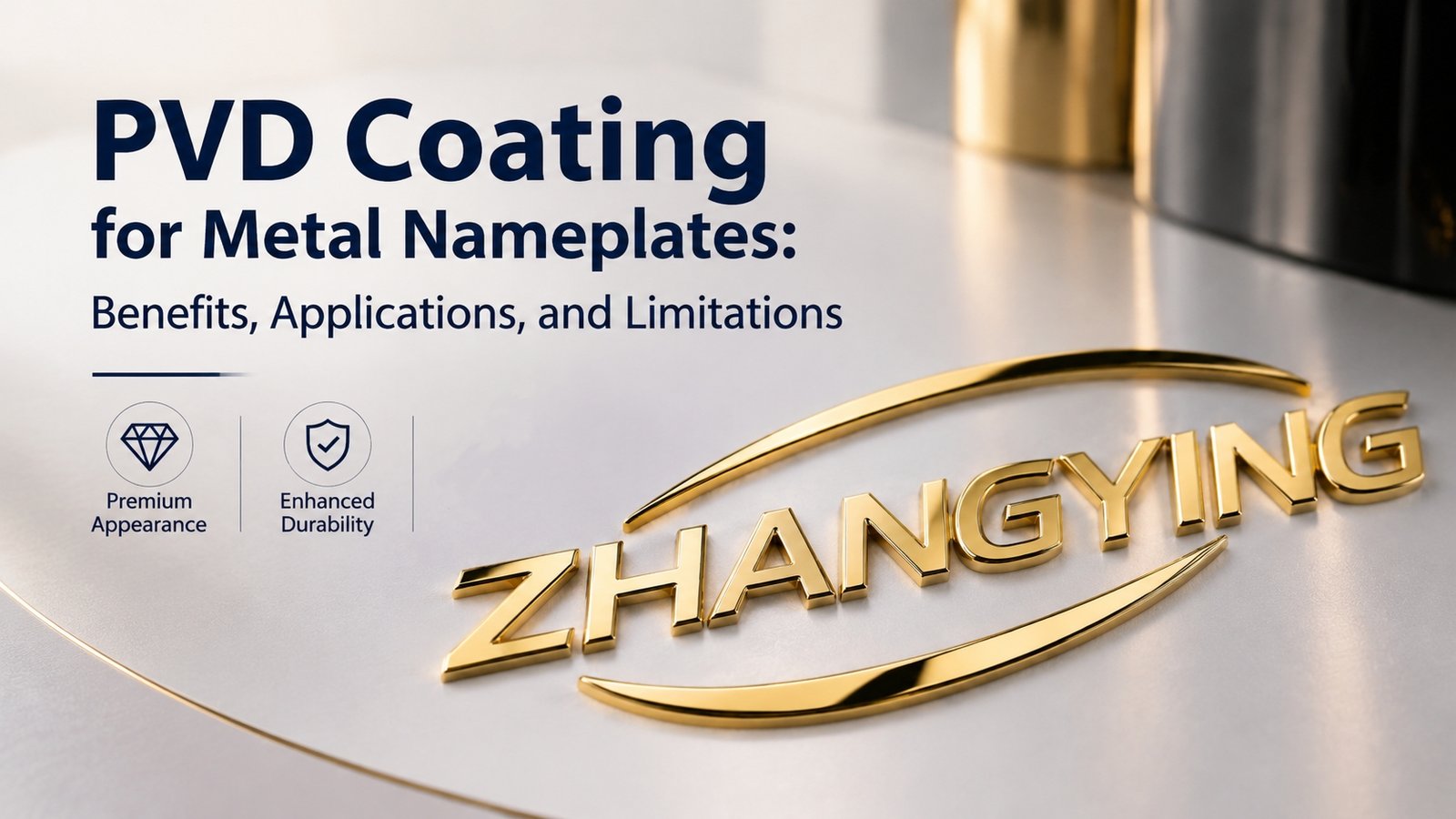
A range of metallic colors. PVD can create finishes such as gold, black, blue, and gunmetal. These finishes can help a nameplate coordinate with a product’s design.
A refined metallic appearance. PVD adds a surface finish while retaining the underlying texture. The base material’s polishing, brushing, and cleanliness therefore affect the final appearance.
Wear resistance with the right coating. Some PVD coatings can improve resistance to wear and abrasion. Performance depends on the coating and application, so avoid treating any PVD finish as scratch-proof.
A thin surface layer. PVD deposits a coating rather than a thick decorative layer. Exact thickness varies by coating and process; confirm it with the coating supplier when fine details or dimensions matter.
PVD uses vacuum deposition rather than conventional wet electroplating. This process difference does not, by itself, prove that a finished part complies with RoHS or REACH. Confirm compliance through the relevant material declarations and project documentation.
What Are the Limitations?
Custom colors may require extra sampling. A standard finish may be easier to match than a special brand color. Approve a physical color sample before production.
Batch color needs a defined standard. Agree on the approved sample and inspection method, especially when the badge must match other product trim.
PVD will not hide base-material defects. Scratches, pits, and inconsistent polishing can remain visible through the coating. Check the substrate finish before coating.
Part geometry can affect coverage. Deep recesses and hidden areas may not receive the same coverage as exposed surfaces. Review the complete part shape with the coating supplier.
Durability must be verified for the application. Corrosion resistance, UV resistance, adhesion, and wear depend on the coating system and base construction. ISO 23100:2024 specifies evaluation and test methods for decorative PVD coatings on kitchen and sanitary ware fittings; its scope does not automatically cover every metal logo or nameplate. (ISO 23100:2024)
When Should You Consider PVD?
If you want a metal nameplate with a distinctive metallic color, a coordinated premium appearance, or improved wear resistance from a suitable coating, PVD may be worth evaluating.
Before selecting it, confirm the base material and surface preparation, review the part geometry, approve a physical color sample, and agree on tests that reflect the product’s actual use. PVD is a finish choice—not a blanket guarantee of corrosion resistance, UV life, or regulatory compliance.
For a thin, detailed metal logo, explore our electroformed nickel logo stickers.
Have a custom metal badge project? Contact our team to discuss your requirements.
PVD capability should be confirmed for each project before it is offered as a Zhangying service.